Thoughts and reflections

Tag: faithgoeswalkabout Page 4 of 7

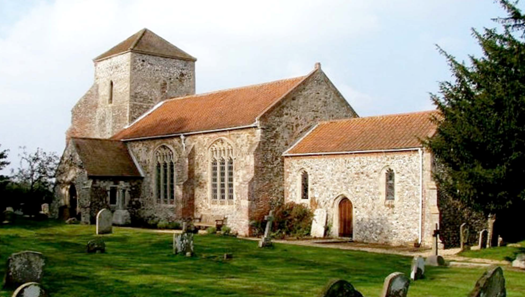
Have we locked God in the church?

Have we really locked God in the church along with the pews? Did we firmly turn the key and slide the bolt so we can’t get in and He can’t get out?

Over the last week , or is it two… all the churches have been locked. Understandably church goers are distressed. Where can they go to pray and worship? Is anybody doing anything?

But out of sadness there comes joy,and out of a locked church emerges online services. Numbers for people listening in to a service of their choice is huge, larger than church attendance by far. So, now is the time to reach out and offer help and support to all those who are getting in touch.

And, no, of course we haven’t locked God in the church, how could we. He is out there, with us, walking with us through this crisis, reaching out to all who ask.
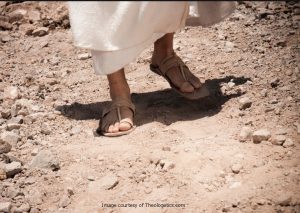
And all we have to do is to ask, to pray and to find Him in our lives  today.


Rev’d Sue Martin
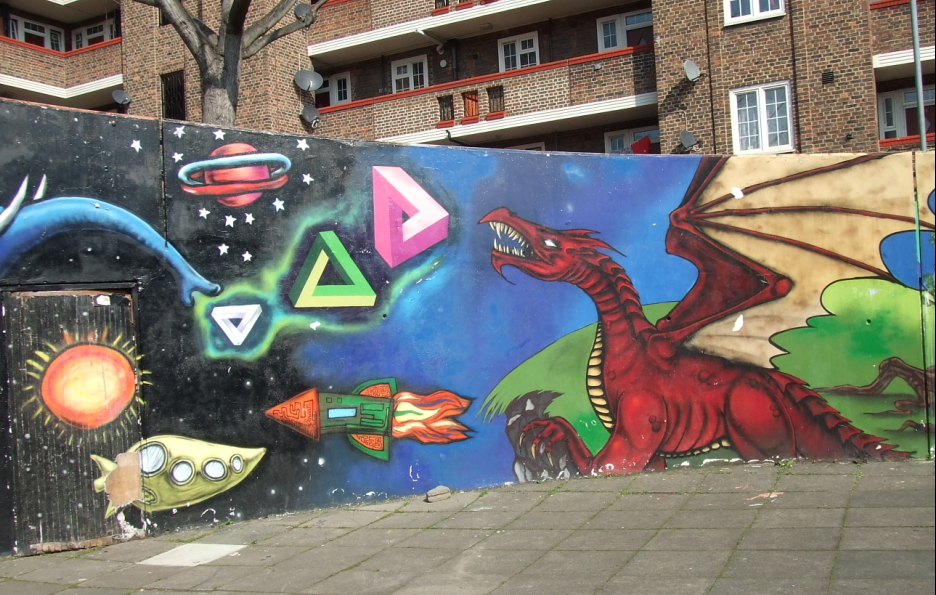
Heroes and Villains – Archangel St Michael

Mural on entrance wall at Rockingham Centre

Dragons at Rockingham Centre, Southwark

Many stories have a hero and a villain.
Some that come to mind are; Superman and Lex Luther , Batman and The Joker, Harry Potter and Voldemort, Sherlock Holmes and Moriarty, Luke Skywalker and Darth Vader,

What happens in these stories; well let’s take Harry Potter, of course…

As he grows up in his school at Hogwarts he discovers the evil truth about Voldemort, that he is trying to overthrow all that is good in the world of wizardry including the head of the school,  Professor Dumbledore.
But Harry Potter is strong and rises up to those who are used by Voldemort to
do his evil works, eventually Harry Potter meets and fights with Voldemort himself.
Harry Potter the hero and Voldemort the villain.

Sherlock Holmes, the series with Benedict Cumberbatch and Martin Freeman is one of my favourites.
Sherlock who is able to make amazing deductions from clues, is always aware that
Moriarty is a force that is usually present.
And so then to St Michael, we hear in the book of Revelations that Michael and his angels fight the dragon and his angels and that Satan, the dragon is defeated and thrown down.

So St Michael is the hero!!

And then what about his band of angels, read more in Faith Goes Walkabout, sermons.

Rev’d Sue Martin

Lent Course, A Journey to the Holy Land


As part of our discovery about our own journeys we are looking at parts of the Holy Land; Galilee, Nazareth, Bethlehem and Jerusalem.
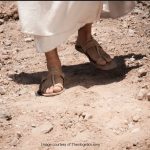
Sacred places, walking in the footsteps of Jesus, 2000 years on in our own time with changes and challenges but still a deep sense of God’s presence.

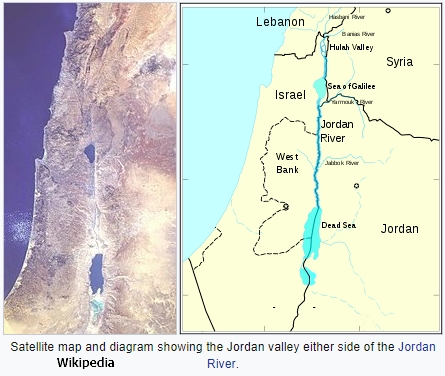
The Holy Land is the place in which Jesus grew up and carried out his ministry. It is an area about the size of Wales, although it has many different parts.

Physically it is set on the edge, the edge of the Mediterranean and Europe, the edge of The Middle East and Africa.

The valley of the River Jordan is a rift valley and is the deepest valley in the world. It develops from the Sea of Galilee and continues to the Dead Sea. Further south it reaches the Red Sea.

It is featured many time in the Old and New Testament. It continues to this day to be a place of friction and war.

Read more at Lent Course 2019 as the journey evolves over four weeks in Lent

Rev’d Sue Martin

Happy Christmas

And all the bells on earth shall ring

On Christmas Day

On Christmas Day

And all the bells on earth shall ring on Christmas Day

In the Morning

Happy Christmas to All

Rev’d Sue Martin


Remembrance 2018 – 100 Years

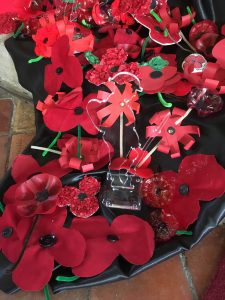
Poppies made by the Girl Guides,Gayton

One hundred years ago the Armistice was signed between the Allies of World War 1 and the German Empire. The cessation of hostilities took effect at 11.00 am on 11th November 1918.

This year marks the centenary and Remembrance Day is commemorated across the UK.

In our Benefice on Norfolk, we held two main services with packed churches and two minutes silence at 11.00am. Even the traffic stopped on the road for us this year. In the evening  two large bonfires were held and again huge numbers of people gathered to watch and the church bells rang out at 6.50pm to join in across the UK.

This was followed by singing the old songs and enjoying a glass of wine and some cakes and listening to stores of people from our village who went to war and never returned.

The first verse of the poem by Rupert Brooke, written in 1914, is a reminder of that time and the young men who gave their lives in the trenches in France and Belgium.

If I should die, think only this of me:

That there’s some corner of a foreign field

That is forever England. There shall be

In that rich earth a richer dust concealed;

A dust whom England bore, shaped, made aware,

Gave, once, her flowers to love, her ways to roam,

A body of England’s breathing English air,

Washed by rivers, blest by suns of home.


And think, this heart, all evil shed away,

A pulse in the eternal mind, no less

Gives somewhere back the thoughts by England given;

Her sights and sounds; dreams happy as her day;

And laughter, learnt if friends; and gentleness,

In hearts at peace, under an English heaven.

Rupert Brooke 1914

Rev’d Sue Martin

The Bread of Life


What does it mean I am the bread of life?  John 6:24-35
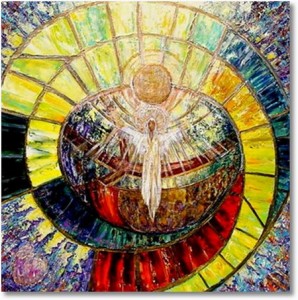
Jesus had left the disciples behind for a while and they had found him on the other side of the lake, Lake Galilee is very large so it would have taken some time to have found him.

You know those times when you just fancy a few minutes on your own to have a coffee or to have time with your thoughts, and then someone comes along and finds you.

And then what do they do, they invariably ask you a question.

The disciples did the same with Jesus, “When did you come here?”

Jesus had just performed the miracle of making the five loaves and two fishes  feed a crowd of five thousand.

Presumably he had slipped away when the disciples were busy handing out the food, everyone was hungry.

Jesus doesn’t answer directly to the question from the disciples, that was not the important question. The answer that Jesus gave was about bread, but not just the bread that we eat with fish, but about the bread of life…

Read more on Sermons 2017-2018

Rev’d Sue Martin

Happy Easter

What is Easter all about? Why do we have so much chocolate?
 CBBC explains the history of Easter, eggs and chocolate. 

 A weekend of wet weather in the UK could certainly turn us all into eating chocolate.

But the real Easter message is about Jesus, risen from the dead, alive and with us, here, now and forever.

The cross that we wear and the cross that he bore gives us the light to walk out into the world and proclaim him Lord, It takes away the power of darkness, it takes away the things that we do wrong and leads us in to an eternal life.

It is a love proclaimed, God who sent his only Son to be with us to show his love for all his people.

We are  lucky indeed

Rev’d Sue Martin

Joy to the World

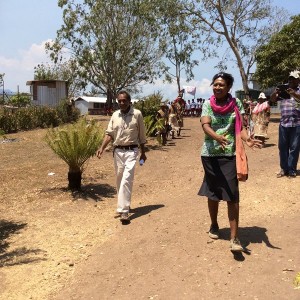
From Papua New Guinea to England, there is joy in every place. Sometimes we just do not see it!

At a community school, where all the staff are volunteers and life is quite hard, the chair of governors welcomes our pilgrimage from Diocese of Norwich in 2015, with joy and happiness in her smile.

Sometimes we just do not recognise the happiness and joy in our lives. So let’s go out there and spread the joy!

The earth is the Lord’s and all that is in it.

Psalm 24, verse 1

Bishop’s Lent Appeal, Norwich Diocese is to Simbai in Papua New Guinea

Rev’d Sue Martin

Joy in Lent

Kalpana, brothers and sisters in the Himalayas. We support them.

Lent is a time for reflection and for giving things up. But why can’t it also be a time for joy!

This year as part of a Lent Reflection I will be posting about joy.


Joy can be seen all around us, it is infectious and children share it very easily.

But the angel said to them, “Do not be afraid. I bring you good news of great joy. It is for all the people“.  Luke 2, verse 10.

What better news could there be.

Joy, happiness and blessings in abundance.

Rev’d Sue Martin


Epiphany

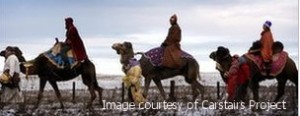
The Visit of the Magi

To show or to make known, to be made manifest, the meaning of Epiphany.

It is also a revelation or an ‘epiphany’, when all becomes clear.

In church it is marked by the colours of gold and white and is best known for the visit of the three wise men to the stable on the twelfth day of Christmas.

An interesting fact is that, around January 6, the symbol +C+B+M+ with two numbers before and two numbers after (for example, 20+C+B+M+12) is sometimes seen written in chalk above the doorway of Christian homes. The letters are the initials of the traditional names of the Three Magi: Caspar, Melchior and Balthasar. These letters also abbreviate the Latin phrase Christus mansionem benedicat, “May Christ bless the house.” The beginning and ending numbers are the year, 2012 in the example above. The crosses represent Christ.

Read more in Epiphany,Faith goes Walkabout

 Rev’d Sue Martin

Page 4 of 7

Powered by WordPress & Theme by Anders Norén